CUSTOM SOFTWARE DEVELOPMENT
Software that moves as your organization does.
Avenier designs and develops custom software that connects your people, workflows, and information—so teams work better today and the system can adapt when needs change.
Built for growing businesses, nonprofits, and public-serving organizations.
- Understand
- Map
- Build
- Adapt
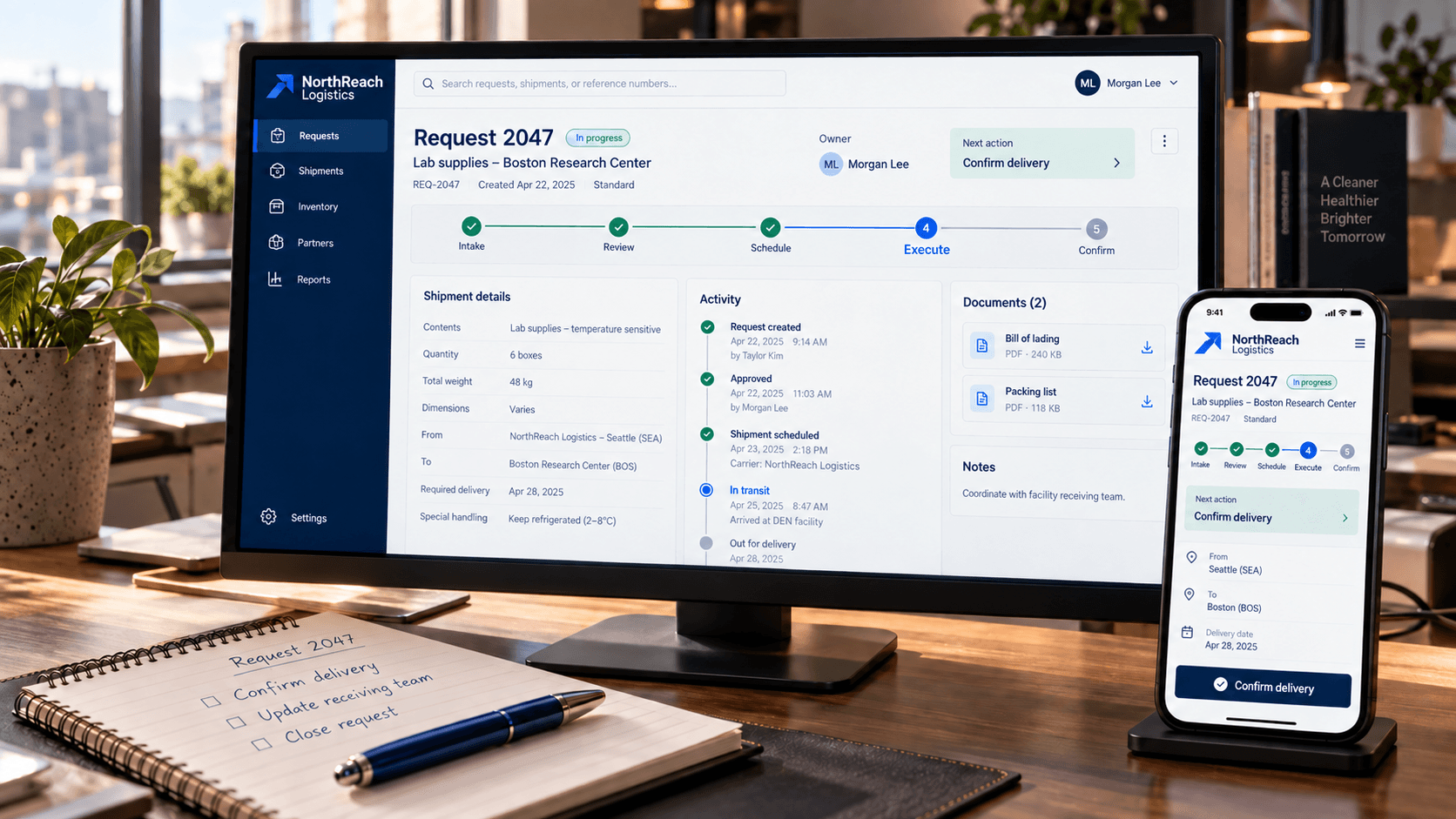
Avenier Lab concept — an illustrative demonstration, not a client project.
BEFORE THE BUILD
Understand how work happens. Build for where it’s going.
The right software begins with a close look at the people, decisions, and systems behind the work. We connect what your organization needs today with what it needs to do next, so the result can grow with you.
OPERATIONAL FRICTION
Find the friction. Make room for what’s next.
We trace where information, decisions, and handoffs slow the work—then identify what a better connected system needs to do.
DISCONNECTED WORKFLOW
The same details are re-keyed, searched for, and chased.
- Repeated manual entry
- Information spread across tools
- Unclear ownership and status
What it costs: Time goes to coordinating the work instead of doing it.
THE AVENIER DIRECTION
Work moves through one system built around the people doing it.
- One connected source of truth
- Clear roles and action paths
- Visible progress and exceptions
What follows: Teams see what needs attention and act on it in one place.
HOW IT COMES TOGETHER
From today’s complexity to tomorrow’s capability.
We align on the work, shape the system, then build it for real use.

- 01
Discover & Align
Understand the people, processes, and decisions behind the work.
Software built on assumptions repeats today’s problems.
DeliverableApproved system direction and workflow structure.
- 02
Architect & Prototype
Shape the experience and test how the proposed system will work.
Your team can react to something real before the full build begins.
DeliverableSystem architecture, interface direction, and working prototype.
- 03
Build & Prepare
Develop, test, and launch software your team is ready to use.
A system only helps once the people using it are prepared for it.
DeliverableTested software, training, and an agreed support path.
ACROSS THE OPERATION
One connected system. Room to move forward.
Requests, decisions, updates, and documents stay connected as work moves between people and places. Everyone can see what needs attention now—and what comes next.
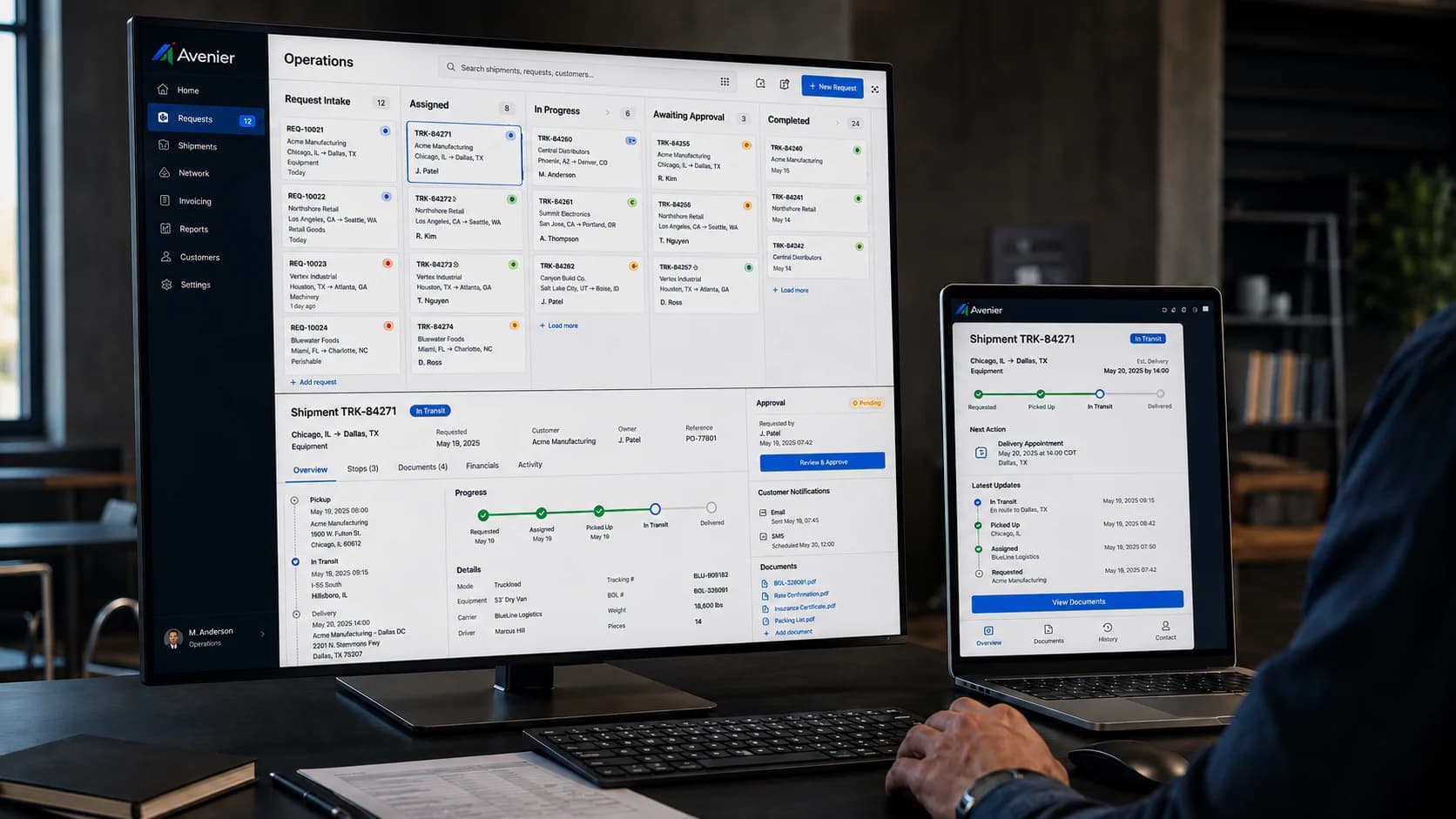
Depending on the need, that system can connect forms, existing tools, documents, and reporting in one clearer flow.
One view
Help teams see the information they need to make decisions.
One record
Reduce disconnected information and unnecessary duplicate entry.
Shared momentum
Help work move between people and departments without losing context.
AVENIER LAB
See what connected work could look like.
Two Avenier Lab studies that turn complex handoffs into connected systems, in very different organizations.
Independent concept studiesIndependent demonstrations of our approach; not commissioned client work or reported results.
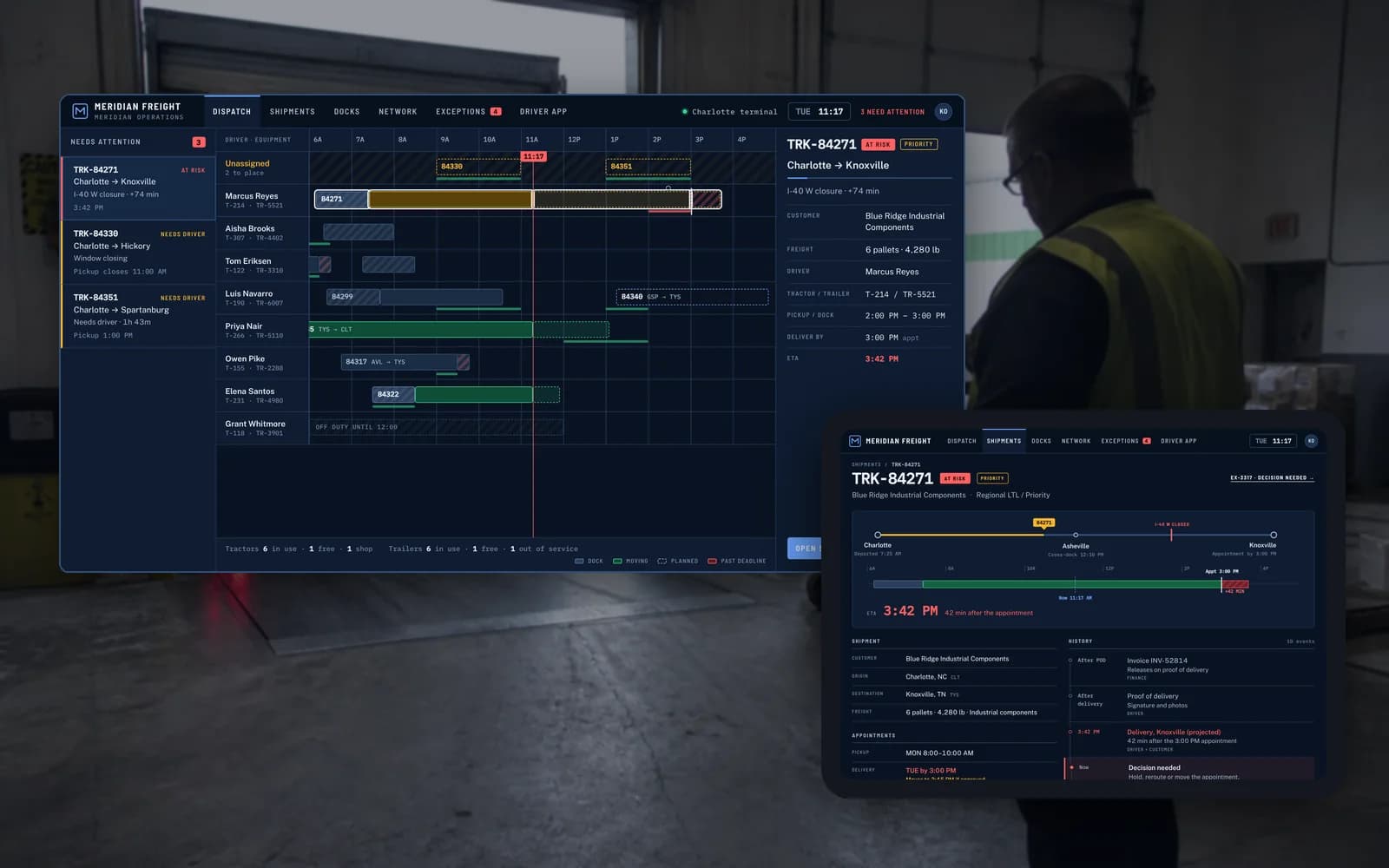
Logistics Operations
Follow one shipment from request through proof of delivery, with dispatch, the dock and the road on one record.
- One shipment, one record
- Dispatch, dock, and road
The design thinkingThe study asks what dispatch, the dock, and the driver each need to see, then keeps all of it on one shipment record.
Explore the full study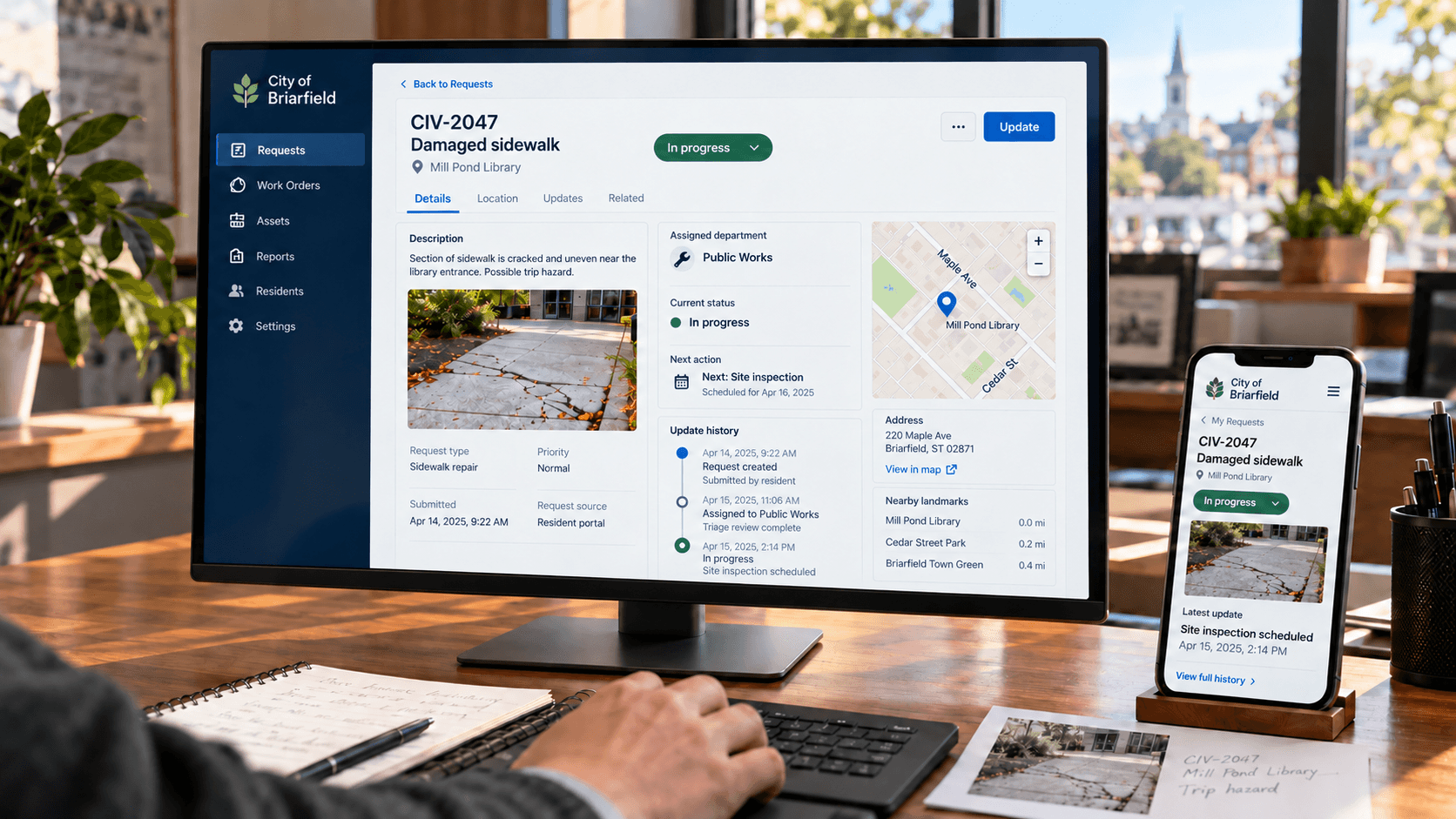
City of Briarfield
See how a resident request can move across departments while staff and residents stay informed.
- Requests across departments
- Staff and resident updates
The design thinkingThe study follows one sidewalk-repair request, so staff and residents see the same status, owner, and update history.
Explore the full studyQUESTIONS
Questions before we begin
Practical answers about planning, building, and supporting custom software with Avenier.
The timeline depends on the workflows involved, the number of users and integrations, and how much needs to be designed and tested. A focused first release can take less time than a larger system with several teams or complex data needs. During discovery, we’ll define the initial scope, identify dependencies, and propose a realistic schedule with milestones. Where it makes sense, we can plan a useful first release before expanding the system.
No. Most projects begin before there is a specification. Tell us what the work involves and where it slows down. During discovery, we’ll turn that into requirements, scope, and priorities that you can review and approve before development begins.
Often, yes. We can assess connections to existing applications, forms, databases, document systems, and reporting tools. What is possible depends on each tool’s available APIs, data access, security requirements, and technical limitations. We’ll review those constraints early and recommend whether to integrate, improve an existing process, or build a new component.
Ownership, access, hosting, and handover should be clear before development begins. We’ll discuss how your organization needs to use and manage its data and document the applicable terms in the project agreement. If you have specific requirements for source code, hosting, or future maintenance by another team, raise them during discovery so they can be addressed in the scope and agreement.
Software can involve costs paid to other providers, such as hosting, third-party services, licenses, or payment processing fees. We’ll identify the ones likely to apply during planning so they are visible before you commit. Specific amounts depend on the project and are discussed during scoping.
Your team’s knowledge is essential, especially when we map the current work, confirm priorities, review prototypes, and test the system against real scenarios. We’ll identify decision-makers and points of contact early, then organize feedback around clear milestones. The goal is to get the right input without requiring your staff to manage the development work.
A successful launch includes testing, preparation for the people who will use the system, and a plan for what comes next. We can discuss training, fixes, updates, hosting responsibilities, and continued improvements as part of the project plan. Any ongoing support arrangement, availability, and response expectations will be defined separately rather than assumed.
THE NEXT STAGE
Let’s build whatyour work needs next.
Tell us what your organization is trying to accomplish and where the work slows down. We’ll help you find a practical next step, from refining a workflow to connecting systems or building custom software.
WORKING DIRECTION
A first conversation, on paper
Current friction
Requests move between disconnected tools.
Proposed direction
One shared record with clear ownership.
First step
Map the workflow and test a prototype.
Illustrative example, not a client document.